From prestigious recognitions to new partners, our consortium is vibrant and dynamic...
Stumbling upon a potential superkilonova, observing the first lensed superluminous supernova and other science news...
ZTF released the 24th public data release and completed a ML-classified calatog of variable starts. Babamul - our alert broker for Rubin alerts began serving the global astro community...
ZTF rsearchers and students bring you their latest research in this sort video series...

A consortium consisting of the German Center for Astrophysics in Goerlitz, the Leibniz-Institute for Astrophysics, Potsdam and the German Electron Synchrotron DESY is officially joining the Zwicky Transient Facility partnership, expanding our scientific collaborative network in Europe and growing our team of world-class researchers and students.
Read More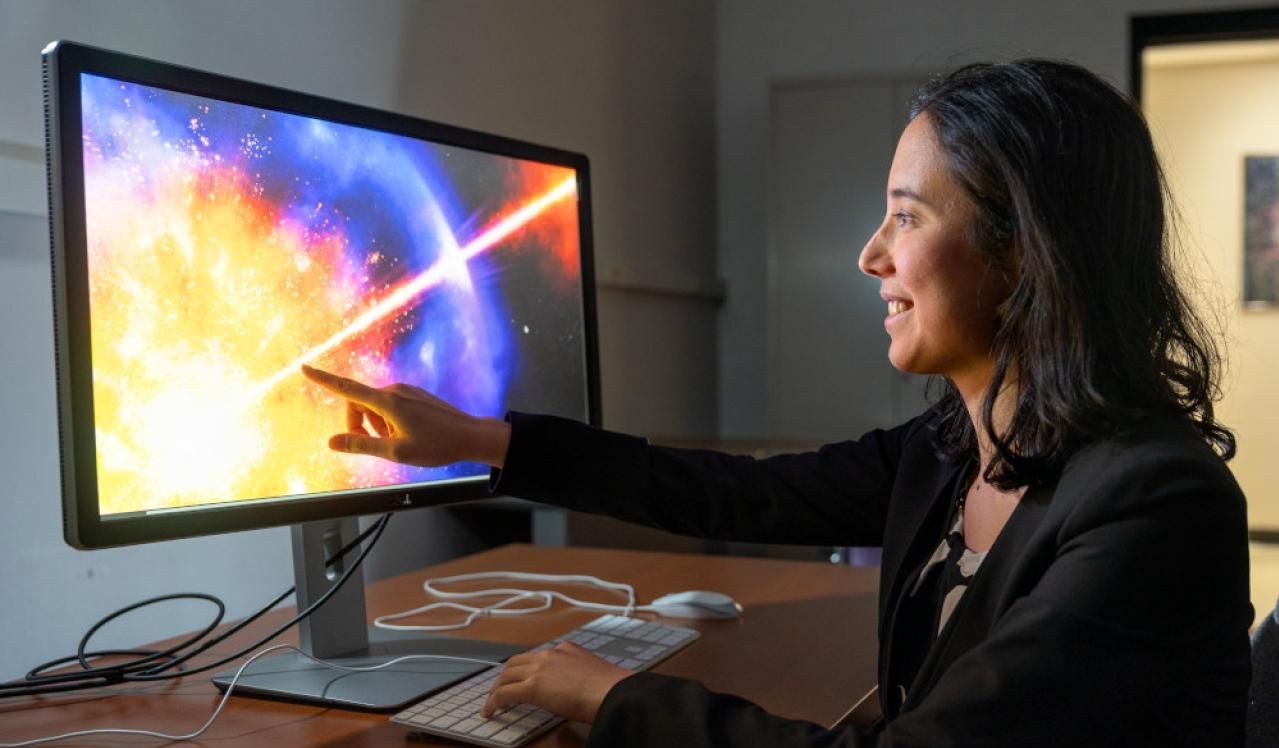
This year, the Pierce Prize by the American Astronomical Society was awarded to ZTF partner Anna Ho, currently an anssistant professor of astronomy at Cornell University. The prize recognizes her "pioneering rapid multi-wavelength investigations of extreme explosions powered by stellar death, revealing ultra-bright short-duration optical flaring associated with the new class of fast blue optical transients."
Read More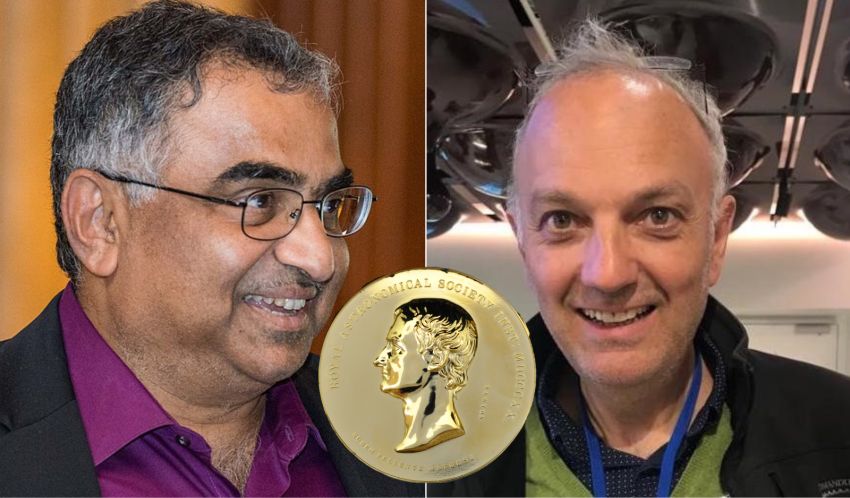
Shri Kulkarni, a professor at the California Institute of Technology who envisioned ZTF earned the Gold Medal in Astronomy for his "field-defining" discoveries in time-domain astronomy and "sustained, innovative and ground-breaking contributions to multi-wavelength transient astrophysics".
Read More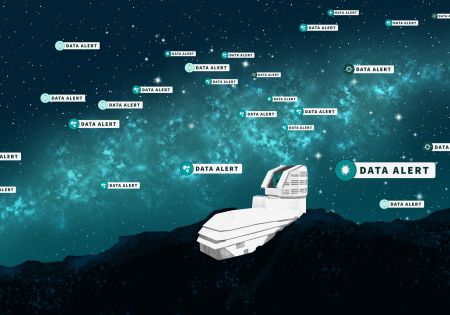
When the Rubin public alerts switched on at the end of Feb, our Babamul broker was ready. Babamul offers a unique multi-survey (Rubin + ZTF) alert stream that makes studies of exotic and fast transients possible. Babamul is now operational and available to the astro community globally.
Read More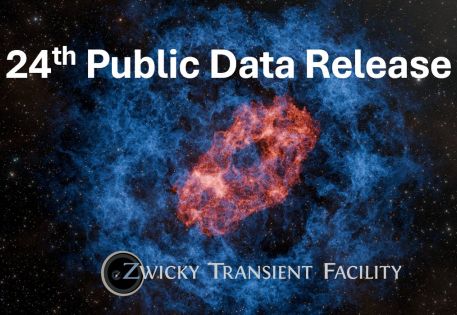
This release adds 12 months of observations to the twenty-third data release, up to 22 October 2025 for the public portion of the survey, and private survey time prior to 22 July 2024. The products include 69.7 million single-exposure images, 188 thousand co-added images, accompanying source catalog files containing 1043 billion source detections extracted from those images, and 5.32 billion light curves constructed from the single-exposure extractions.
Read More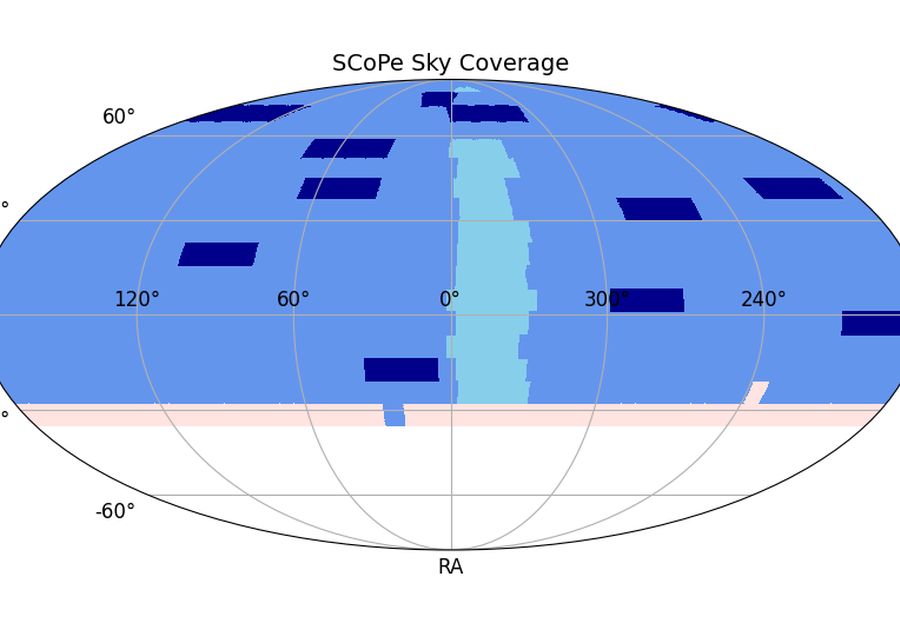
SCoPe - the Source Classification Project is now completed resulting in a catalog which includes machine learning classifications and periods for over 1.6 billion ZTF light curve covering the entire northern sky. The resulting classification catalog is available to the public on Zenodo, and the software \ developed for SCoPe is open source and adaptable to future time-domain surveys.
Read MoreDate: Feb 11, 2026
Kostas Tsalapatas from the Oskar Klein Center at the University of Stockholm describes a very peculiar thermonuclear supernova. Such transients are very common and they behave in a very predictable way, yet this specific supernova exhibited a very prominent second peak in its light curve, while its spectrum revealed a circumstellar material around it that is poor in hydrogen and helium - something that is unexpected for this class of cosmic objects.
The paper "A thermonuclear supernova interacting with hydrogen- and helium-deficient circumstellar material: SN 2020aeuh as a SN Ia-CSM-C/O?" is published in the Astronomy & Astrophysics journal.
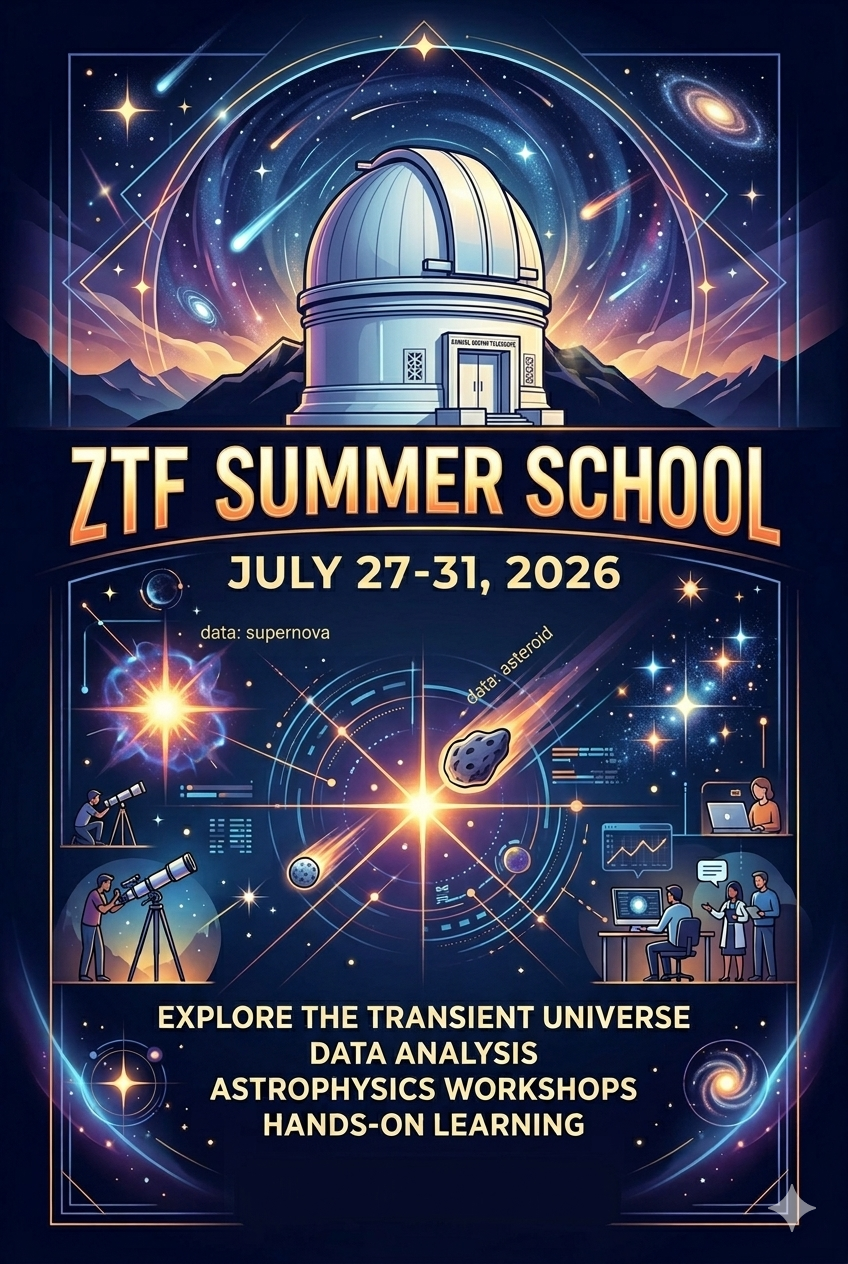
Applications are now open for the ZTF Summer School, taking place July 27–31, 2026 at the University of Minnesota – Twin Cities, USA. Both in-person and remote participation are available but note that only students based in the USA are eligible for in-person attendance.
This is the 8th edition of the ZTF Summer School, and the theme this year is “Science Discovery in Multi-Survey Data Streams”. We will continue our proven format of short lectures combined with hands-on tutorials using Python Jupyter notebooks.
In early 2026, the Vera Rubin alert stream began flowing to the astronomical community via seven alert brokers. The ZTF Babamul broker offers the unique capability to combine ZTF and Rubin alert streams prior to filtering. During the school, we will learn about data processing techniques that enable us to discover exotic transients in such multi-survey streams.
The program is primarily aimed at early-stage graduate students; however, master’s students with research experience in time-domain astronomy are also encouraged to apply.
Learn more & apply
LIGO/Virgo/KAGRA Neutron Star Merger Candidate S250206dm: Zwicky Transient Facility Observations
Ahumada et al.
Publications of the Astronomical Society of the Pacific (2026)
DOI: 10.1088/1538-3873/ae4539
Low-luminosity Type IIP Supernovae from the Zwicky Transient Facility Census of the Local Universe. II. Lightcurve Analysis
Das et al.
Publications of the Astronomical Society of the Pacific (2026)
DOI: 10.1088/1538-3873/ae33f5
A young supernova selection pipeline for the LSST era
Addison et al.
Monthly Notices of the Royal Astronomical Society (2026)
DOI: 10.1093/mnras/staf2278
Small near-Earth Objects in the Taurid Resonant Swarm
Ye et al.
Acta Astronautica (2026)
DOI: 10.1016/j.actaastro.2025.09.077
AT2024wpp: An Extremely Luminous Fast Ultraviolet Transient Powered by Accretion onto a Black Hole
Perley et al.
arXiv e-prints (2026)
DOI: 10.48550/arXiv.2601.03337
Low-latency Forecasts of Kilonova Light Curves for Rubin and ZTF
Johnson et al.
Publications of the Astronomical Society of the Pacific (2026)
DOI: 10.1088/1538-3873/ae2e87
Exploring Hard X-Ray Properties of Gamma-Ray Emitting Narrow-line Seyfert I Galaxies through NuSTAR Observations
Chaudhary et al.
The Astrophysical Journal (2026)
DOI: 10.3847/1538-4357/ae18cc
ZTF25abjmnps (AT2025ulz) and S250818k: A Candidate Superkilonova from a Subthreshold Subsolar Gravitational-wave Trigger
Kasliwal et al.
The Astrophysical Journal (2025)
DOI: 10.3847/2041-8213/ae2000
A Luminous and Hot Infrared through X-Ray Transient at a 5 kpc Offset from a Dwarf Galaxy
Somalwar et al.
The Astrophysical Journal (2025)
DOI: 10.3847/1538-4357/ae1501
The automation of optical transient discovery and classification in Rubin-era time-domain astronomy
Rehemtulla et al.
Nature Astronomy (2025)
DOI: 10.1038/s41550-025-02720-6