ZTF News
Home / ZTF News
Babamul Goes Live as the Rubin Alert Stream Opens to the Community
Feb 25, 2026 | News
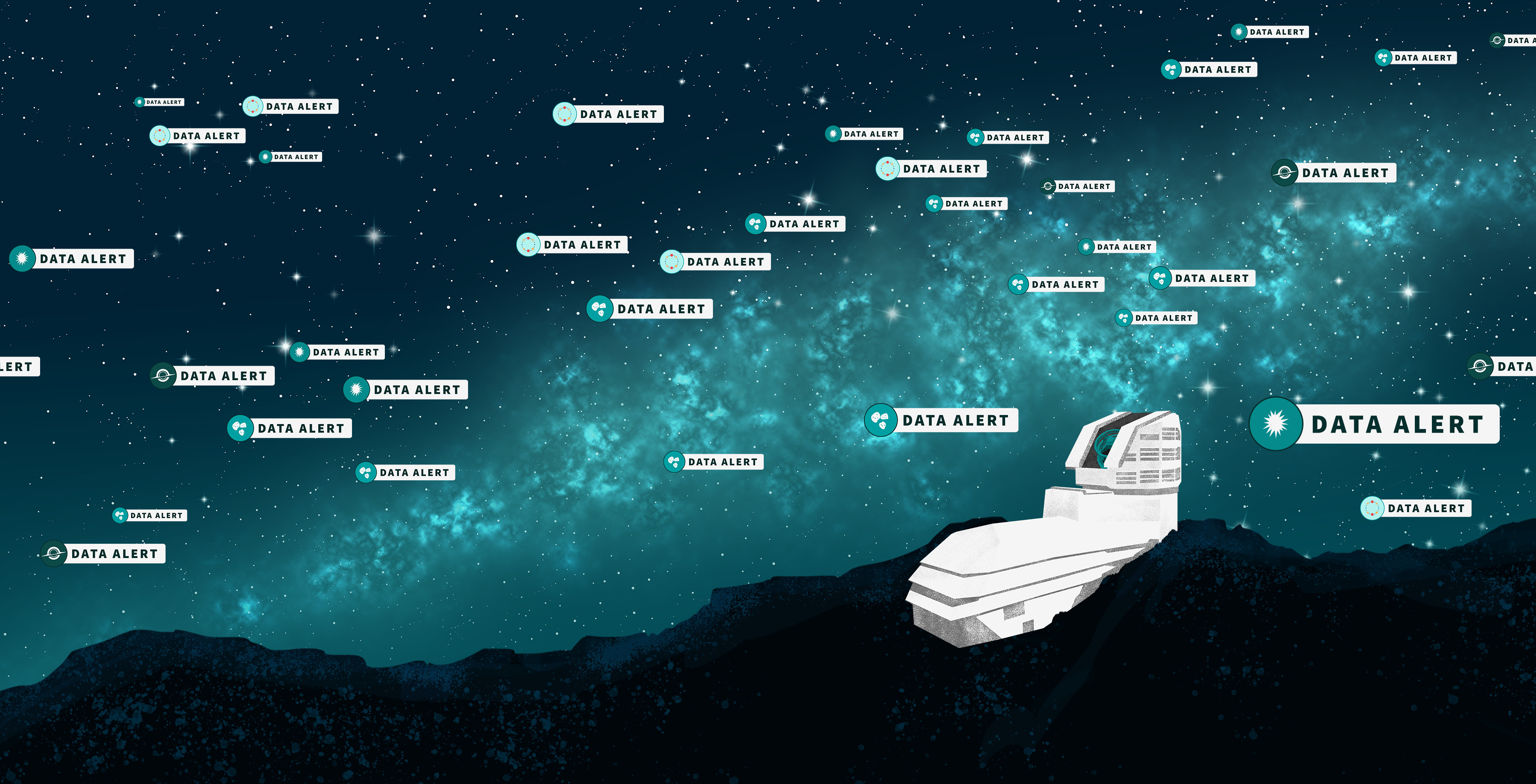
This artist’s illustration represents the start of the alert stream from NSF–DOE Vera C. Rubin Observatory. The summit facility is shown on a rocky ridge. The night sky features stars and the glittering band of the Milky Way Galaxy. The sky is populated with multiple alert “pings,” representing individual alerts from Rubin that something in the sky has changed in brightness or position. Different icons represent various types of alerts, including asteroids, supernovae, active galactic nuclei, and variable stars. Credit: NSF–DOE Vera C. Rubin Observatory/NOIRLab/SLAC/AURA/P. Marenfeld/J. Pinto
Marking a major milestone, alerts from the Vera C. Rubin Observatory have begun flowing to dedicated broker systems that will filter and distribute the Rubin alert stream to the astronomical community worldwide. Babamul—one of Rubin’s selected alert brokers—officially began operations today. Developed by Caltech in collaboration with partners at the University of California, Berkeley, and the University of Minnesota, Babamul offers a distinctive suite of filtering and distribution capabilities, empowering astronomers to pursue novel scientific questions.
Perched at an altitude of ~2700m in the mountains of north-central Chile, the Vera C. Rubin Observatory is ready for a decade-long mapping of the southern sky that will produce the largest and most sensitive survey of the transient universe. Astronomers from around the world will utilize this treasure trove of data to address long-standing questions about the physics and evolution of the cosmos and uncover new, previously unseen phenomena.
As the 8.4 m mirror of Rubin scans the sky, any observed change detected with sufficient confidence (SNR >5) will generate an alert. Since the expected rate of alerts per night is ~7 million, this large data stream will only be distributed to several alert brokers. These brokers are data systems that can process the alerts in real time and present them to astronomers in a manageable format, along with tools for further scientific exploration.
“A long time back, we were already imagining intelligent astro assistants that can automate much of the discovery process for time-domain astronomers. Our Rubin-selected broker Babamul, which is built on an innovative software infrastructure we call BOOM, is a testimony to how far we have come,” says Matthew Graham, the joint principal investigator and project scientist of the Zwicky Transient Facility (ZTF) at Caltech.
Babamul is one of the seven brokers selected by Rubin to manage the data stream from Rubin’s LSST survey (Legacy Survey of Space and Time). While their core functionality may overlap, each broker is developed by a distinct collaboration of astronomers tailored to facilitate diverse scientific goals.
The video begins with individual Rubin Observatory alerts, shown as sets of three “postage stamp” images. Then the alerts multiply, revealing the tremendous volume Rubin will generate — up to about seven million each night — each one capturing a change in the Universe. Credit: NSF–DOE Vera C. Rubin Observatory/NOIRLab/SLAC/AURA. Alert images with classifications provided by ALeRce and Lasair
Multi-survey capabilities at scale
A distinguishing feature of Babamul, compared to other brokers, is its ability to combine the ZTF and LSST alert streams for continuous cross-matching before filtering, without compromising real-time delivery to astronomers. This capability enables the discovery of rapidly evolving transient events, such as young supernovae or poorly understood exotic phenomena known as Luminous Fast Optical Blue Transients (LFBOTs). Such fast events could be missed when searching in a single survey alone, but become readily detectable when the LSST and ZTF streams are combined seamlessly.
A key feature in Babamul, is the ability to filter through the Rubin stream while combining it with other surveys’ data. At first, Babamul will offer a set of filters breaking down the full LSST stream (stellar, hosted, hostless, etc). Each stream is further split into alerts with and those without ZTF matches. Similarly, the ZTF stream is broken into sub-streams with and without LSST matches. The API facilitates further user-defined filtering on these streams with custom tools or simple Python notebooks.
“We can offer multi-survey capabilities thanks to BOOM, which does the heavy lifting: storing, enriching, and filtering through both ZTF and Rubin alerts streams. Babamul is the public interface that delivers these streams to the community in real-time. Unlike most other brokers, which use Python, our codebase is written in Rust whose advantage is to provide fast and reliable processing at scale,” says Theo du Laz, who is the software lead behind the project.
Via Babamul, astronomers can also select and filter objects based on machine learning scores that use new, multi-modal models. In effect, these models can take into account different types of data, for example, image data and lightcurve data to support more advanced classifications of transient objects. This value-added functionality can help astronomers rapidly identify rare and exotic transients that would otherwise be lost in the nightly flood of millions of alerts.
“What excites me the most is that BOOM/Babamul is built from the ground up focusing on multi-survey brokering. This, combined with its ability to scale effectively in terms of data volumes and processing speed, already makes me dream of the next step, when we are jointly analyzing many multi-wavelength facilities together,” says Michael Coughlin, an associate professor of physics and astronomy at the University of Minnesota whose research group is co-leading the development of BOOM/Babamul, focusing on filtering and machine learning technologies.
Enabling powerful new survey
Babamul will also enable a newly launched survey called Z+LIONS (ZTF + LSST Inventory of Nuclear Transients and Supernovae). Z+LIONS aims to create a unique spectroscopic survey of ZTF transients that fall within the Rubin LSST Wide-Fast-Deep (WFD) footprint of the sky and provide a ground truth sample for future machine learning projects with LSST.
ZTF and Rubin Observatory excel at systematically tracking changes in the brightness of cosmic events over time. When these observations are combined with spectral data—which reveal how light is distributed across different wavelengths—astronomers can construct a comprehensive picture of the events’ composition and the physical processes that drive their behavior.
Z+LIONS is undertaking spectroscopy with multiple spectrographs, including the newly commissioned Next Generation Palomar Spectrograph on the Palomar Hale 200-inch telescope. It is a next-generation survey building on the ZTF Bright Transient Survey, which has produced the largest sample to date of over 10,000 spectroscopically classified supernovae.
Babamul is hosted at Caltech and the University of Minnesota, Twin Cities, both serving publicly available data streams. Astronomers can choose how to access various data products. They can use an API to perform archival and semi-real-time searches, a web application to query and display data, and Apache Kafka to consume the filtered streams in real time.
“With ZTF we have already proven that we can completely automate the discovery and follow-up study of supernovae. In the coming years, we have to expand this in the era of Rubin observations with systems like BOOM/Babamul and LLM-based technology to enable astronomers to dig ever deeper into the mysteries of the universe,” says Mansi Kasliwal, professor of astronomy at Caltech and principal investigator of the NSF-funded program supporting Babamul.
BOOM/Babamul is funded by the National Science Foundation under award #2432476.
See also NSF–DOE Vera C. Rubin Observatory Launches Real-Time Discovery Machine for Monitoring the Night Sky.
Contact
Science Contact
Theo du Laz
ZTF SW Lead (Caltech)
tdulaz [at] caltech [dot] edu
Media Contact
Iva Kostadinova
ZTF Program Coordinator
ivonata [at] caltech [dot] edu
Media
What is Babamul & how to get started Rubin Science Assembly video recording
Date: Feb 12, 2026
Peer-reviewed Publication
To ask questions and receive support, please reach out to us at babamul@lists.astro.caltech.edu.
Meat Babamul Team

Theo du Laz
Caltech

Michael Coughlin
University of Minnesota
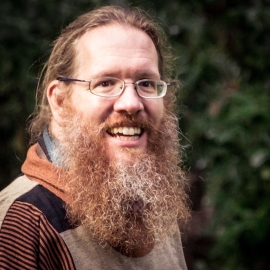
Matthew Graham
Caltech

Josh Bloom
University of California, Berkeley
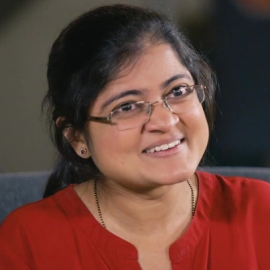
Mansi Kasliwal
Caltech
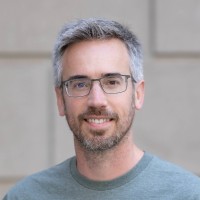
Stefan Van Der Walt
University of California, Berkeley
Pete Bachant
Caltech

Antoine Le Calloch
University of Minnesota

Thomas Culino
Caltech
Argyro Sasli
University of Minnesota
